

Field School
)
Balatonszárszó
Balatonszárszó lies on the southern shore of Lake Balaton, often called Hungary's Riviera, almost directly opposite the picturesque Tihany Peninsula. In addition to the scenic landscape and excellent local wines, the region offers outstanding opportunities for excursions. Numerous historical and archaeological sites are located nearby, including Keszthely, Szigliget Castle, the Roman villa at Baláca, and the Tihany Abbey.
)
Archaeology of Balatonszárszó
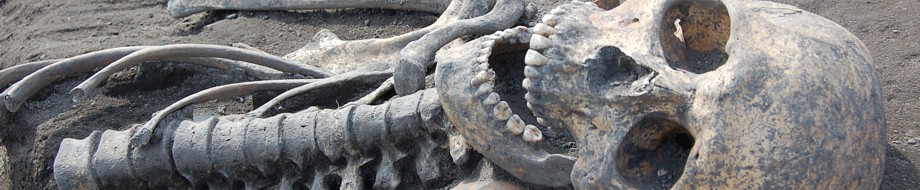
In 2000, a rescue excavation began on a portion of the large cemetery of Kis-erdei dűlő in Balatonszárszó, considered the medieval predecessor of the present-day Balatonszárszó town. Archaeological works carried out between 2000 and 2006, prompted by the construction of the M7 motorway, revealed 1,368 graves. Of these, 43 dated to the Neolithic period, 1 to the Avar era, 1,073 to the Medieval period, 189 to the Early Modern period, and 62 could not be identified. The cemetery contained well-preserved skeletons typical of their respective periods. While most graves lacked grave goods, several contained items of clothing. One notable artifact type is the párta, a headdress traditionally associated with Slavic and Hungarian territories. It was worn by young women of marriageable age, often prepared for their wedding. In the case of those who died prematurely, the párta was placed in their grave instead.
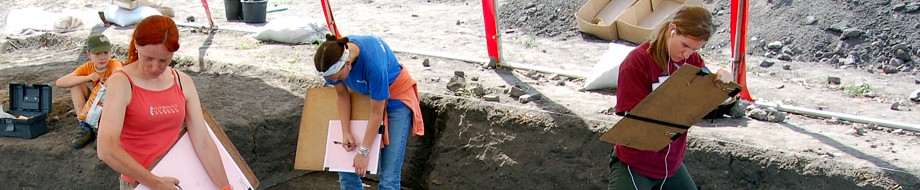
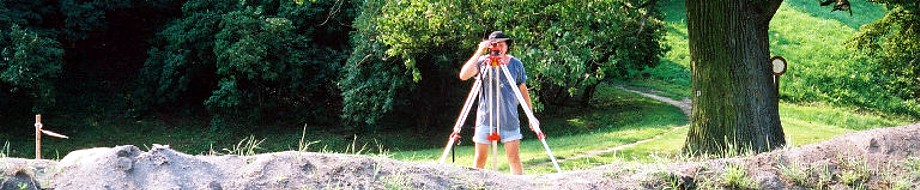
During the archaeological investigations, the foundations of a church built during the reign of king Andrew II (13th century) were uncovered, along with the later fortifications surrounding it. Fortunately, the construction of the motorway did not destroy the entire site, leaving a significant portion intact, and many mysteries still waiting to be explored. This ongoing research carried out with the National Museum of Hungary offers an excellent opportunity for Slavia Field School students to engage in careful, methodical, detail-oriented archaeological work under the guidance of experienced instructors, helping them learn the fundamentals of human remains recovery.
)
Royal castle, Budapest
The immediate destination for Slavia Field School students is the magnificent capital of Hungary – Budapest. The city offers numerous sights worth visiting, including the Royal Castle and the iconic Parliament Building. Many 19th-century structures in the inner city preserve the atmosphere of the Austro-Hungarian Empire. Situated on the Danube River, Budapest is a major cultural, educational, and economic center, whose rich historical heritage and vibrant urban life attract millions of visitors from around the world each year.